Tuesday, April 2, 2019

2018 Wrap Up

Hello, friends. It is I, the supremely late Sonnet, rolling into this review post on April 2, a full 3 months past the New Year. It has been quite a wild ride, though, so I'm only a little mad that I'm so late! Definitely planning on making more of a concerted effort to schedule myself this year, though. (Shut up, I don't say that every year...) Anyway, here are some quick thoughts (and hot links) on the books I read for the 2018 Read Harder Challenge!


She Came By The Book by Mary Wings
January - mystery by LGBTQ+ or POC author
I said it in my main review and I'll say it again: any book that starts with "As a lesbian..." is bound to be an interesting one for me. I loved discovering Mary Wings' work at the Affirmations book sale, and I loved that the queer part of the story was just as important as the actual mystery.

The Princess Diarist by Carrie Fisher
January - celebrity memoir
Space Mom! You were too good for us, and I hope we do you proud. I loved getting a peek into Carrie Fisher's young mind, the raw honesty and cleverness.

Miss Marple: The Complete Short Stories by Agatha Christie
February - female protagonist over age 60
I love Miss Marple. I want to be an old lady knitting and solving mysteries and unobtrusively telling everyone she's smarter than them. Not in so many words, of course.

So You Want to Talk About Race by Ijeoma Oluo
February - social sciences
Ijeoma Oluo is one of my go-to writers now, when I want to try to understand something powerful that is happening in the world. Everyone should read this book, but especially white people. R E A D  I T .

The Story of Edgar Sawtelle by David Wroblewski
March - Oprah Book Club selection
Hamlet in the Midwest! I am a sucker for retellings, especially ones that stretch the conceivable bounds for a retelling. Don't get me wrong, I'll read Beauty and the Beast in a slightly different European forest all day, but take a Danish monarchical tragedy and put it in rural Wisconsin? Sold.

The Power by Naomi Alderman
March - sci-fi novel with a female protagonist by a female author
Can you imagine what it would be like for women to be suddenly infused with the terrifying power and strength to take the world back? No? Maybe read this book then? (And also, like, a lot of other books. Work on your imagination, bro.)

Children of Blood and Bone by Tomi Adeyemi  (Legacy of Orisha #1)
April - first in a new-to-you YA series
I can't keep saying "I love this book" and move on to the next blurb. But I love this book. Sure, I have some quibbles, so I made everyone I know read it so I could argue with them about it, but overall, Blood and Bone is so important in terms of representation and expansion of pan-African influences in young adult media and Tomi did a bang-up job. Waiting on #2 now. . .

Monstress Vol. 1: Awakening by Marjorie M. Liu
April - comic written or illustrated by a POC
Unreliable narrators who are possibly also a little evil, paired with an art style dense with line and emotion, in a matriarchal version of Feudal Japan.

Thunderstruck by Erik Larson
May - true crime
Wow, it took a long time to get to the actual murder! But I know more about transatlantic communication (also skin removal) than I ever thought I wanted to know.

Moonstruck! Vol 1: Magic to Brew by Grace Ellis, Shae Beagle, and Kate Leth
May - one-sitting read
I read this queer graphic novel in bed on my birthday and I think that pretty much sums up how I feel about it. Cozy and happy and gay.

Wide Sargasso Sea by Jean Rhys
June - post/colonial literature
This is a pretty famous pivot in literature, telling a famous story from a minor character's perspective, and I very much enjoyed this addition to Jane Eyre, one of my favorite novels. The play with point of view alone in this book really resonates.

When Breath Becomes Air by Paul Kalanithi
June- published posthumously
I knew whatever book I chose for this was going to be rough, and I decided to just put myself through the ringer for this one. My father was diagnosed with esophageal cancer last March, and so of course I decided to read a book about a man who died from (brain) cancer and wrote about his experience. This was a beautiful, raw little book and it solidified a lot of things for me.

Double Bind: Women On Ambition ed. by Robin Romm
July - essay anthology
Am I ambitious? What does that even mean? I really dug deep with this one, asking myself the same questions all the contributors asked in the penning of their essays. Is ambition motivation? Follow-through? Drive? Success? Can it waver, and come back? I'm working on it.

The Neverending Story by Michael Ende
July - children's classic written before 1980
I've always loved The Neverending Story the movie and long since thought I should read the book. The book was interesting, the movie only covers the first half of it, and honestly I'm glad, because second half Bastian suuuuucks.

The Revolution of Marina M by Janet Fitch
August - book about a BRICS country (Russia)
Wow this was a TOME. A thicc introspective dive into the Russian Revolution. I fell in love with Marina, and my heart hurt for every one of the zillion heartbreaking things that happened to her in an inconceivably short amount of time. This is the kind of book that made me want to write historical fiction.

What A Plant Knows: A Field Guide to the Senses by Daniel Chamovitz
August - book about nature
I work for Backyard Brains, and I plucked this book off our office library shelf. We recently started doing experiments with plants, and this book is essentially the backbone of our research with them. How can we understand plants in a way that translates to understanding ourselves as people?

Yellowthroat by Penny Hayes 
September - western
Two words. Lesbian. Western. Need I say more? Sure, there were some sleepy tropes, but ultimately I was happy that the author did not live there, in those tropes that are unfortunately still all too common in queer media.

Ash by Malinda Lo
September - romance novel by/about a POC
Did I mention that I love retellings? And queer things? And this was a queer fairy tale retelling?

Handling the Undead by John Ajvide Lindqvist
October - genre fiction in translation
John Ajvide Lindqvist is consistently an author who gives me the creeps in absolutely the best way. He makes the horror so banal and close to home that you cannot distance yourself from it at all.

Heat Wave by Richard Castle
October - book with a cover you hate
I love Castle, and I love that they ghostwrote this book by Castle! It was so on-brand for the show and I truly got confused between cases on the show and the case in this book. Oops!

Infinite Jest by David Foster Wallace
November - assigned book you never finished
I did it! I finished the behemoth! I learned so many words, some of which are not real words, and I think I maybe followed most of what happened, but I think part of the point of Infinite Jest is that you maybe don't fully understand it.

Nimona by Noelle Stevenson
November - comic written and drawn by the same person
I am literally so excited for the 2020 adaptation of this. Noelle Stevenson is such goals!

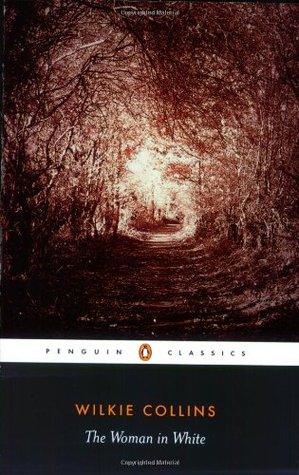
The Woman In White by Wilkie Collins
December - classic of genre fiction
SO. MUCH. RAGE. Just click through and read my tweets. It's touted as a classic, but I had too many problems with it for it to land on my favorites list.

The Chilling Adventures of Sabrina: Book One by Roberto Aguirre-Sacasa and Robert Hack
December - graphic novel not published by Marvel, DC, or Image
Spooky teenage girls with powers! Netflix adaptations with badass ladies!

One of my goals for 2019 is to be better about scheduling time for myself to write, especially about the things I love. I went through bouts where I didn't write at all about these books, and there are gaps in my posting. This is just for me, I'm sure, but I want to be more organized in 2019. I really love the heightened challenge of two books and reviews a month, but I think I still need to get my groove.

That being said, this year was pretty great personally. I bought a house with my love and we just started our first major renovation project on it; I skated multiple games for the charter team and I'm hoping to amp up my track time for 2019; I started training for a strongwoman competition (finally), I finished NaNoWriMo (though not the draft of my novel!).


Previous years:
~ 2017 ~ 2016 ~ 2015 ~ 2014 ~ 2013 ~

Monday, April 1, 2019

DEC - The Chilling Adventures of Sabrina

December review for Book Riot's Read Harder 2018: Chilling Adventures of Sabrina Vol 1: The Crucible by Roberto Aguirre-Sacasa and Robert Hack (Artist), 2016. [comic not published by Marvel, DC, or Image category]


Netflix adapted Chilling Adventures of Sabrina last year and I, like many horror fantasy fans, was rightly excited. Kiernan Shipka looked perfect, and I couldn't wait to see Miranda Otto in a new light. Needless to say, I greedily binged the series when it came out and went out in search of the original graphic novel, to really round out my obsession.

The graphic novel is certainly much darker than the Netflix adaptation, killing Harvey instead of his brother, and playing into the trauma surrounding Sabrina's father more deeply with (~spoilers~) his spirit coming back in Harvey's body. I think I liked what the adaptation did, shifting the darkness in certain ways, such as those mentioned above, to make the horror hit a little more closer to home, not as on-the-nose.

One thing I really liked about the graphic novel was the Riverdale crossover: we actually got to see characters from the Riverdale universe come into Sabrina's world (much to their dismay, however), and I look forward to seeing whether that will come into play in the adaptation as well, seeing as the Riverdale TV show is so very popular already.

Reading this copy of Chilling Adventures: Vol I, there was an introduction by Roberto Aguirre-Sacasa, talking about his process, how he came to the story and how he found the right feel. I absolutely feel like the art style was positively reflected in the Netflix adaptation, and I found it perfectly on-key for the vibe of the story. I look forward to moving further into Sabrina's world, both reading and streaming.


DEC - The Woman In White

December review for Book Riot's Read Harder 2018: The Woman in White by Wilkie Collins, 1860. [Classic of genre fiction category]


16058113I really, really wanted to like The Woman In White by Wilkie Collins. It's the OG gothic horror novel, called the first "sensation fiction" and one of the first mystery novels, and there were parts of it that were really good! The mystery was fun (one of the reasons I actually finished it) but there were just some needling things that I could not get over. This was my December 2018 book, but I just needed such long cooling-off periods in between reads that it stretched over into the new year. (As did the penning of this blog post....) But here we go. The Woman In White starts with "an eerie encounter on a moonlit road," according to all the summaries of it, but I'm going to be honest and say I just didn't find it quite that eerie. Maybe because I am distanced from the time in which it was written? But I digress. Walter Hartwright meets a woman on a road late at night, she tells him a story, and disappears into the darkness (despite wearing the brightest white the guy has ever seen). Then he hears a rumor she might've escaped from an asylum. My knee-jerk reaction is to always sympathize with women who claim unlawful incarceration, especially in asylums, especially with the imbalance of power that comes from taking away a human's agency and the stability of their mind. So I was already on this woman's side, and not Mr. Hartwright's, so I might not have been Mr. Collins's intended audience. I was forging my own path. 

Things happen, Mr. Hartwright continues on to his job which (coincidentally) is tangentially related to that weird occurrence. He is to teach drawing to this young woman on an estate, whose uncle is psychosomatically incapacitated and particular, but thank goodness for the woman's sister, Marian, who could maybe fight for her if anything were to happen. But then enters my true rage. Marian begins to say things about her character as a woman being deficient for pretty much anything, all the while holding herself in high esteem. 

Allow me to just summarize some of my feelings by treating you to a sampling of my rage-tweets on the matter:


So. the women are not allowed to be even full humans, let alone strong or capable or even fucking interesting. I have feelings. Continuing on with the mystery, enter new players that make me super skeptical, and another woman who just lives at the behest of her husband and is also portrayed as a viper and someone you should not like at all. Marian ends up spying on this husband and his friend (who is now married to her sister and trying to basically extort her but he's her husband so that's ok), and she overhears these things--cue more rage-tweets:

Marian of course catches her death while she eavesdrops and is PRETTY MUCH INCAPACITATED FOR A GOOD PORTION OF THE REST OF THE BOOK, allowing the next step of the shitty men's plan to come to fruition. AWESOME. But it's not like she could've done much, anyway, remember? She's just a woman.

The anger continued as I stubbornly made my way through the rest of the book. The twist was relatively interesting, and something that I only partially saw coming (the gist of it, not the particulars), and so I soldiered on.


The book is sort of an epistolary fiction, taking sections from each player and point of view, their diaries and correspondence, so it was interesting to move through different "versions" of the story, especially at the end when so much comes to a head and things are revealed. I can't really summarize the end because I am too tired for it and also no spoilers, but needless to say shit goes down, women get some measure of power, but ultimately it is the men who "fix" everything. Because of course. I would have liked this book more if the power the women got was sustained and appreciated. If Marian had actually used her strength to get her sister out after she, too, was wrongfully shut up in an asylum, instead of the men "allowing" her to do it behind the scenes. The suggestion that every move a woman made was foreseen and encouraged by the men around them was just infuriating, and the systematic denial of the women characters any sort of thought or even self-appreciation was just exhausting. I don't know if Wilkie Collins hated women or had complicated feelings about them and was just toeing the party line of the late 19th century, but the fact that this was a highly original type of story is diminished in my eyes by his treatment of these characters. In fact, the entire premise of the mystery depends on the subjugation and other-ness of the women involved, so really, this story could not have been told if he felt any differently about women.

Reader, I finished it. I suppose I am glad to have read it (something I always gauge myself on when I finish something I don't love), and I am glad to have had the outlet of Twitter and my friends to keep me sane through the reading of it.

Sunday, March 31, 2019

NOV - Infinite Jest

November review for Book Riot's Read Harder 2018: Infinite Jest by David Foster Wallace, 2005. [assigned book you never finished]

My friends and I started reading Infinite Jest a few years ago, but our little book club petered out. It sat on my shelf for a long time, until this category! I do love the language, the way DFW plays with words, but it was difficult to get through, especially in the way I've been reading, snatches on my commute or drowsy in bed. That being said, I am glad I finished it.

How does one really summarize Infinite Jest? It is a postmodern encyclopedic novel, a behemoth of a text that I used as a headrest on more than one occasion. It has been described as "meta modernist" and "hysterical realist." It's set in a halfway house and a tennis academy, features junkies on both sides, told in a stream-of-consciousness similar to that popularized by Virginia Woolf, but very very clearly written and created by a man. There is an Infinite Jest wiki that was wildly helpful throughout my reading, because god knows the footnotes were just as cryptic as the book itself.

So much of this book is figuring out DFW's language/shorthand etc. He uses footnotes for wildly differing reasons, from defining the technical composition of drugs to parenthetical interviews to asides to fucking defining POV but there's nothing that is like "when I say demapped it means killed or suicide" like most normal footnotes. The truth (Truth) in this book is constructed, rather than reported (page 1048, footnote 269). The footnotes can be used as construction, in various ways: through asides (264), definitions (308), parentheticals (325), and research (304), among others.

A friend's review of IJ, immortalized
I am glad to have read this book, I am stubborn enough to have finished it, but I am equally glad that it is over. David Foster Wallace is a very talented and complicated man, to be sure, and a genius with wordplay, and he is truly worth studying.

Saturday, March 30, 2019

NOV - Nimona

November review for Book Riot's Read Harder 2018: Nimona by Noelle Stevenson, 2015. [comic drawn and written by the same person]

Nimona is so many things I've always wanted in a graphic novel. Scrappy girl protagonists, magic, upending of the dichotomy of good and evil, magical bureaucracy, and shapeshifting! Plus Noelle Stevenson, the author/artist is like, the coolest (and now she has made She-Ra on Netflix, which is equally rad).

Nimona comes to Sir Ballister Blackheart as a new sidekick and pretty much throws a wrench in all of his plans. Sir Ballister is pretty much the top dog in a magical world that blends magic and sci-fi tech, and he never really gets much done until Nimona shows up. He has to try to teach is protege restraint (she always wants to go around killing people and setting things on fire, which is a bit too far for the cerebral villain Sir Ballister. Nimona is a fiery little girl with a butch haircut and a big mouth who also happens to be a shapeshifter! How incredibly cool would it be to be Nimona?

Nimona and Ballister go on missions, quibble about the level of villainy that is acceptable, and slowly become close. The Good Guy Brigade (I mean, the Institute) employs Ballister's archnemesis, the hero Goldenloin, who has some serious history with our villain. As the story progresses, we learn more and more about the less-good things about the Institute, Goldenloin gets more and more disillusioned with his job sitch, and Ballister and Nimona burrow their way into each others' hearts, and of course the inevitable happens, where they hurt each other and leave, but Sir Ballister works to find her again, and set things right. Nimona deals with such heavy shit in such a completely understandable and accessible manner, even though it is sci-fi, and it is going to be a classic for a long time.

Nimona in a nutshell

Monday, March 25, 2019

OCT - Handling The Undead

October review for Book Riot's Read Harder 2018: Handling The Undead by John Ajvide Lindqvist, 2009. [genre fiction in translation category]

Handling The Undead by John Ajvide Lindqvist is a spooky book. But spooky in the way that it's pretty much our normal, everyday world, except for this one supernatural turn. I recognize that a lot of horror (and also thriller) can be explained this way, but my point is that Lindqvist doesn't come at the novel from the perspective of writing a scary story. He introduces human emotion and watches what happens when the world is turned upside down. What does grief do to a person, especially in the face of the impossible?

When the city is faced with a heat wave and weird occurrences start bringing people's loved ones back to life...but are they the same people? David's wife is the first one to come back, and he always knew she was too good for him, so how is he supposed to carry on and raise their kid without her? Or how can a grandfather go on without his favorite grandson? Or an old woman whose husband died recently, and his recurrence makes her question everything about her faith? Slowly, the country figures out what to do with the risen dead, calling in the army to sequester the increasingly more violent problem, and people pack in to see their loved ones when everything goes terribly wrong. Again, Lindqvist manages to tap into the most human part of horror, and Handling The Undead will leave you with the slightest of tingles at the base of your scalp long after you've turned the last page.

Tuesday, March 12, 2019

OCT - Heat Wave

October review for Book Riot's Read Harder 2018: Heat Wave by Richard Castle, 2016. [book with a cover you hate category]


I had to think real hard about this, because I often do the opposite: choose to read a book purely because I am intrigued by the cover. I don't know that I have ever actively hated a book cover: I am generally OK with movie tie-in editions, although I don't profess to *love* them, as long as I can still get my own attractive copy. So I had to dig deep and think about what I would really roll my eyes at when I saw a book. I settled, in the end, on romance novel covers (inexplicably glistening pecs and mid-swoon damsels) and pulp crime novels.

Heat Wave by Richard Castle is a little bit of both, arguably. It is a sort of tie-in with Castle the TV show (starring Nathan Fillion and Stana Katic), and I read it just as I was starting my partner on the show. Needless to say, the similarities between the Heat Wave characters and their inspirations are many and sometimes I had to double check which case I was in. Having that backstory (from the show) certainly enriched the experience, and I felt a little closer to the story than I maybe would have if I had just picked it up with no knowledge. All in all, I enjoyed this quick little read, even if the cover drove me a little crazy.

Friday, February 22, 2019

2019 Read Harder


Hello! It is already nearly the end of February and I am still finishing my writing for 2018, shame on me! In any case, a lot has been going on, and I am trying to chug away at it as best I can. In the mean time, I want to make a little note to myself as I introduce the Book Riot 2019 Read Harder Challenge that I will be following again this year.

First of all, I (re)discovered Libby, an app that works with your library card to bring you e-books and audiobooks, and let me tell you that my work life is forever changed with the addition of audiobooks! I have already listened to so many, and it's only February! Because I have such a plethora of options available to me, I have made it a personal little challenge to increase the diversity of what I read, especially in terms of women, queers, and people of color. I have read enough white men for a while, and while a few may sneak back from time to time (looking at you, Stephen King) I want to prioritize other voices this year. I just finished We Were Eight Years In Power: An American Tragedy by Ta-Nehisi Coates (click here for a great review of it), and while it was very heavy, it is very very necessary and I have already stocked my Libby TBR pile with similar books for the coming months. White Fragility, When They Call You A Terrorist, Educated, Shrill, How Long 'Til Black Future Month....titles abound!


BOOK RIOT’S 2019 READ HARDER CHALLENGE

  1. An epistolary novel or collection of letters
  2. An alternate history novel
  3. A book by a woman and/or AOC (Author of Color) that won a literary award in 2018: The Fact Of A Body by Alexandria Marzano-Lesnevich
  1. A humor book
  2. A book by a journalist or about journalism
  3. A book by an AOC set in or about space: Binti by Nnedi Okorafor
  4. An #ownvoices book set in Mexico or Central America
  5. An #ownvoices book set in Oceania
  6. A book published prior to January 1, 2019, with fewer than 100 reviews on Goodreads
  7. A translated book written by and/or translated by a woman
  8. A book of manga
  9. A book in which an animal or inanimate object is a point-of-view character
  10. A book by or about someone that identifies as neurodiverse
  11. A cozy mystery
  12. A book of mythology or folklore
  13. An historical romance by an AOC
  14. A business book
  15. A novel by a trans or nonbinary author
  16. A book of nonviolent true crime: Can You Ever Forgive Me by Lee Israel
  17. A book written in prison
  18. A comic by an LGBTQIA creator
  19. A children’s or middle grade book (not YA) that has won a diversity award since 2009
  20. A self-published book
  21. A collection of poetry published since 2014
As of right now, I have a few books for the challenge under my belt, though I haven't written about any of them yet. I have to get back to my languishing partner, Writing, and treat her with the respect that is her due. It has been far too long!

Happy reading, 2019! 

Thursday, December 27, 2018

SEPT - Yellowthroat

September review for Book Riot's Read Harder 2018: Yellowthroat by Penny Hayes, 1988. [western category]


In order to find a book for this category, I pretty much just googled "lesbian western." And I found Yellowthroat by Penny Hayes, who apparently is the lady who came up with the lesbian western in the first place! Good to know that I started from the beginning. I've always been sort of a purist that way.

Yellowthroat was published by Naiad Press, one of the publishing companies dedicated to lesbian lit (succeeded by Bella Books), and I think I may have gotten a very early edition of the book, because the pages were falling out of the old glued binding by the time I was done. But I love this copy. I love the cover design, I love the simplicity of it. It is what it is, and nothing more. A sentiment Margarita (the bandit) and Julia (the kidnapped) both emulate in their own ways by the end.

The gist of Yellowthroat is a wlw romance, which I am obviously here for. I loved the scandalous description on the back cover for what happens once Margarita's band of bandits is required to take a female hostage back to their camp because one of them is gravely injured: "Once more Margarita's life undergoes drastic changes. Because amid a growing emotional attachment to Julia Blake, she has discovered the unthinkable: a sexual attraction to another woman." GASP. This is exactly what I wanted. Another item of note in the pro column of this review, is that the lady romance is not the climax of the book. So many of the lesbian novels I read climax quite literally with a single sex scene between the two women in the last act of the book. But Yellowthroat subverts that by introducing the attraction early on, and allowing the falling action of the book to be the women coming back together for their happily ever after (once Margarita has stopped being an idiot).

That being said, the ending fixed itself. Throughout the latter half of the book, there was a lot of internal monologue of Margarita's where she denied herself her desire to live out the rest of her life with Julia. She claims she doesn't want to be tied down, but in the next breath talks of how she will most likely marry a man again eventually. The two women start a damn business together and move to a gold mining town and everything is going pretty great when Margarita throws a grenade into everything, saying "sorry I cannot be with you because it doesn't fit what I think my life should look like so bye." I am grateful that the scenes after where Margarita lives by herself in the valley again and berates herself for leaving go by quickly and do not take up nearly as many pages as their time together. I am also incredibly grateful for her finally coming to her senses and returning to Julia, even though she tells herself she's just stopping by as she passes through the town. (No one just stops by in the Old West. It takes too long to get there. It is very clear you wanted to see Julia and kiss her again so just admit it! -- my brain as I read the last few pages.)

But we do get a happily ever after! There is no kill your darlings, return to heteronormativity, or self-denial in this tale! And boy was I happy to get there. I do believe I will be checking out the rest of Penny Hayes's ouvre in the coming months. I do enjoy a woman who knows how to ride a horse...

Wednesday, December 12, 2018

SEPT - Ash

September review for Book Riot's Read Harder 2018: Ash by Malinda Lo, 2009. [romance novel by POC category]

I really liked Ash by Malinda Lo. It was a simple retelling, which I always enjoy, but even moreso when they're queer! Because queers deserve fairy tales too. As in, all the fairy tales need to be queered. (Note to self: write queer fairy tales.) It is a reimagining of Cinderella but with faeries and hunters and lady love. As is standard with Cinderella stories, we begin with an overview of Ash's childhood: her mother's illness and subsequent death, her father's distance and remarriage, the tyranny of her new stepmother after her father passes. The one constant throughout all of her trials are the fairy stories her mother used to tell her, as well as a copy of a book of fairy tales her father bought her as a way to remember her mother. She copes with the death of her parents by escaping to the woods at night, trying to find the fairies, and Ash focuses a lot on what it means to love fairy tales, and how you would respond to the opportunity to live in one.

There's a fantastic review in the Los Angeles Review of Books that talks about the positions of women in this universe: the Huntress, Kaisa, at the head of the King's Hunt, Greenwitches responsible for the magic of the land, et cetera. Ash doesn't interact with very many men after her father dies, and the fairy she meets is not necessarily gendered, although she uses male pronouns to describe him. Women abound in Ash's world, and she is constantly trying to see how she is going to fit. She does not think that she has a place in any of these spaces, just a quiet orphan girl with no skills or anyone to back her up. But still she manages to find her way in the world, meeting a faerie and the King's Huntress and moving through it with their influences, conscious or no.

Ash starts to feel "something as yet unnamed" (p202) when she starts spending time with Kaisa, going on hunts and reading together in the sunshine. I absolutely love this phrase, the way it acknowledges the complexities of emotion and budding sexuality. She does not shy away from this, but keeps observing in her small, shy way, and goes to attend the final ball and see Kaisa once again. But, of course, she is thwarted and has to flee the night. Normally I root for the faeries but not when dawning lady love is at stake! Damn faeries...

But everything is alright in the end. And what an excellent ending, may I say!! Happy endings are few and far between for queer tales, and it left me incredibly pleased. I also enjoyed that (spoilers) she didn't have to choose between endings: she submitted to her deal with the faerie who helped her get out, and then she goes to find Kaisa and tells her that they are free to love each other and that she has found a home. I mean, how much more perfect can you get? Not only a happy ending, but one that was actively and determinedly chosen by a young girl who has found her own power in her story.

Wednesday, October 17, 2018

AUG - The Revolution of Marina M

August review for Book Riot's Read Harder 2018: The Revolution of Marina M by Janet Fitch, 2017. [BRICS country category - Russia]


{note--there will be general spoilers...}

The Revolution of Marina M is one of those books whose covers I saw a lot and stuck in my head until I finally picked it out. (Can we talk about the infuriating placement of library bar codes though? Since when is finding somewhere not blocking some cover content so hard??) A straight-backed, red-haired girl in profile, arms folded confidently and fingers splayed as she grips her own arm. This book tells the story of Marina, an upper-class Russian daughter of a government official who is mixed up (as is all of Russia, really) in the 1917 Russian Revolution and the downfall of the tsar. Fitch plots the revolution through the eyes of one sixteen-year-old girl, seeing purely what she sees of the revolution, how it affects her personal bubble, rather than the large-scale international repercussions.

Marina has occasion to be so many different women throughout her own personal revolution. She starts as the socialite and slips into the revolution by supplying her radical best friend with information about her father's dealings. She is a spy and a starving poet and a factory worker and a prisoner and a wife and a con woman and a follower and a revolutionary and an individual. She says often near the end, that she is "tired of Rooms." She goes on to tell how the rooms defined her relationships to the different people, different lovers, different parts of her life. Her childhood apartments and her relationship with her parents; the Poverty Artel where she moves in with her destitute poet lover and sleeps fully clothed and louse-ridden; the room where Kolya, her childhood crush, takes her when he returns and they stay for three nights of sex and food and abandon; the apartment where she is imprisoned by a mobster; the planetarium to which she escapes and spends a summer as a mute peasant girl; the prison where she is taken when picked up by the police; her best friend's room where she gives in and sleeps with a woman to repay her for saving her life; the old country house that she escapes to only to find it has been overrun by her mother's new-age cult friends. Each room is tied to a person: both a person who controls Marina and the person Marina is in that room, and on the last page of the novel, we end on Marina leaving, walking out into the air and a new start.

I think I could talk forever about my love for Marina's poetics. She uses phrases like "loping iambs and foot-dragging dactyls" to describe the works she immerses herself in. She talks of the difference of placing "word next to word" and creating meaning versus simply stringing sounds together, how old stories make her feel and how poets make the most excellent spies. Contrary to what one might think, Marina's revolution does not come with the publication of her work: in fact, that is where she starts, with her father arranging a small collection of her work, and she has to fight to keep it burning inside her as the revolution threatens to tear it out with her heart with every new tragedy. Not to mention her fire, her sexuality, her verve--I found that I met Marina as a friend, though our stories are worlds and years apart.

Janet Fitch wrote at the end of the book, "research was the oxygen in the water of this novel," and that thrilled me. I have long harbored a desire for writing historical fiction, as it takes a story like this to really cement history for me. I like to learn history through a person's eyes who has lived it, not by memorizing dates in a textbook. Never again will I forget that the Russian Revolution took place in 1917, and I am thrilled to learn that it is only one half of a two-part tale so I can learn more! Now that I'm not in school where I have to prove my knowledge in history essay exams (which give me terrible anxiety), I think I'd like to try my hand at writing a historical fiction project of my own. Marina has inspired me.

AUG - What A Plant Knows: A Field Guide to the Senses

August review for Book Riot's Read Harder 2018: What A Plant Knows: A Field Guide to the Senses by Daniel Chamovitz, 2012. [nature category]


What A Plant Knows: A Field Guide to the Senses was on the shelf in my work's library. As a neuroscience startup with a love of citizen science, our shelves are full of science-y books about how to make sense of the world around us, even if you're not a professional scientist. My coworker recommended this one when I mentioned I needed a book about nature for my Read Harder challenge, and I sped through it!

One of our recent products at work is a Plant SpikerBox that can measure action potentials in plants, even though they have no nervous system! Being an English major, I've only had a tenuous grasp on the science here, so it was fun to read Chamovitz's book as he laid out a methodical narrative about how plants interact with the world, even without being able to move. It even answered some questions I wasn't sure how to phrase, like how pain medicine knows where you're hurting and stops it! Chamovitz ordered his chapters based on parallels between in human sensations and plants, such as "what a plant smells." Plants don't actually smell, but they do have processes which react and respond to odor chemicals!

There were so many other books I had on my list to read, and it made me realize that I don't read a lot of nonfiction, and I should change that. I love these challenges for pushing me out of my standard reading zone.

JUL - The Neverending Story

July review for Book Riot's Read Harder 2018: The Neverending Story by Michael Ende, translated from German by Ralph Mannheim, 1979. [children's classic published before 1980 category]


The Neverending Story! I grew up on this movie. I wanted a Falkor so bad when I was little, and I used to call my old dog Luck Dragon because she looked pretty similar, if I do say so myself. As I'm sure many a reader of this book was, I was surprised to learn that the 1984 film only covered the first half of the book! Which in all honesty is totally fine with me, because second-half Bastian suuuuuucked. But we'll get to that. The Neverending Story is a book about a small boy named Bastian who is bullied and escapes his tormentors by hiding in a bookshop one day. He meets an old, cryptic man who is sort of mean but leaves a tantalizing book open, and Bastian feels called to it, so he steals it (like you do) and locks himself in the school attic to read all day. (And you wonder why this story appealed to me. Minus the bullying.)

Bastian gets caught up in the story and slowly realizes that him reading the story is part of the story (the original postmodern mindfuck), but can't bring himself to help the Childlike Empress, a fact that they wisely revised in the film. In the book, Bastian gets transported to Fantasia and meets the characters he fell in love with as he ventures. He is gifted with the Childlike Empress's amulet, but using its power comes with a price: he slowly loses the memories he had of being human on Earth. Coincidentally, with the loss of those memories, he sucks more and is ruder and ruder to the people he calls his friends and I was very upset with him. There is clearly some moral coding going on here, as he has to eventually make the decision to return home even though he more and more wants to give up the life he has forgotten and stay in Fantasia as the most powerful thing around.

One thing I loved stylistically about this book was the illuminated alphabet for the chapter titles! There were 26 chapters, and each started with the subsequent letter of the alphabet, illuminated in a full-page illustration that tied into the chapter's narrative. Some of the more difficult letters felt a little stilted, but it was helpful that in a fantasy world you can make up character names that start with X! Another was the repeated intrusion of the Real World into the book, what with phrases like "but that is a long story for another time."

I love stories about stories that take you places, and I did like this book, for the most part. It just dragged on a lot longer than I think it needed to. But who knows, maybe it was better in German!

JUL - Double Bind

July review for Book Riot's Read Harder 2018: Double Bind: Women on Ambition ed. by Robin Romm, 2017. [essay collection category]


Double Bind: Women on Ambition is pretty self-explanatory as a collection title. Robin Romm has commissioned a series of essays from women in wide-ranging fields, from literature to butchery, Hollywood to dogsled racing. Romm starts with an intro that examines her impetus to collect these women's stories and what the word ambition meant to her personally. As a writer, clearly I resonated with the writer essays, but I was interestingly struck by some of the other ways in which I related, and some of the questions these essays raised in me.

I currently don't have my copy of this book on hand as I write, since I lent it to my mother--isn't that what you do with books about women? Lend them to the other women in your life?--and this writeup is long overdue so it is going to be a little more overview than specific, but I think I've got the important points jotted down. To begin at the beginning, this is an essay collection about ambition. What does ambition mean? Romm and her contributors talk about the difference between an ambitious man (seen as positive) and an ambitious woman (often seen as overbearing, out of place, unattractive), and there was another interesting thread about the word itself running through these essays. Many of the women asked the people in their lives if they thought the woman was ambitious; few claimed that word for themselves, citing discomfort with the aforementioned undesirable nature of an ambitious woman, impostor syndrome, and myriad other reasons.

A lot of the responses also dealt with the "have it all" mentality, the perennial question plaguing working moms and stay-at-home moms alike: how do career ambition and home life ambition coexist? These essays covered women with kids: women who adopted children, women who had children and left their careers, women who compromised and devoted a lot to their careers but still missed their children. My partner and I have talked about kids vaguely, in some future era when we're both done with our sports, talked about who would have them or if we would adopt, etc, but this book gave me a little pause. I guess I had painted standard children desire over my own thoughts without ever outright asking myself about those desires. Don't get me wrong, I still want kids, but I need to reexamine the hows and the whens and I am lucky to have a partner who is open and honest and supportive of those discussions.

Reading this book in the midst of my sports season made me question whether you can be ambitious in some areas of your life but not necessarily others. Can I strive for a top slot on the charter team but also resign myself to an under-paying job because it's easier to deal with at the moment? Can I be ambitious but lazy, so my ambitions never bear fruit because I don't allow myself enough time on them? Is there something self-sabotaging about that, something inherently misogynistic about a creeping doubt that maybe I should just be happy with what I have? Don't get too big for your britches, my dear, you might regret it. And the answer I came up with is, I don't know. I think that is the point of this essay collection too: no one really knows. It is the asking that is important, the self-analysis that is expected of women categorically more often than men, the constant weighing of our lives against various other shining stars or gutter flops. What does it mean to me? Well that's the question, now isn't it?

Tuesday, July 17, 2018

JUN - When Breath Becomes Air

June review for Book Riot's Read Harder 2018: When Breath Becomes Air by Paul Kalanithi, 2016. [book published posthumously category]

I knew that this was going to be a hard book to read. When Breath Becomes Air, by Paul Kalanithi, is the memoir of a 36-year-old neurosurgeon who is diagnosed with lung cancer before the end of his residency. It was published posthumously (hence its ability to be counted for this category), but that wasn't necessarily what was going to make it hard. Earlier this year, my father was diagnosed with Stage IV Esophageal Cancer. His prognosis is decidedly better than Kalanithi's, and he has finished his first eight-week round of chemo with little to no worsening of his condition. But still. The way that cancer works is that when it infects your life, it becomes a capital letter. Cancer. You can't think about it the same way anymore. It is not remote, like the tragic but heartwarming story of someone that Lifetime made a movie about. It isn't a cautionary tale about someone forty years ago who got it from cigarettes. My father is the single healthiest sixty-year-old man that I know, and he still has cancer. He did everything (mostly) right. He hasn't smoked in over thirty years. He exercises every day, sometimes multiple times. Sure, his hydration could be better, and he could always do more yoga, but still. Cancer wasn't something that happened to someone like him. And yet.

Paul Kalanithi was almost done with his neurosurgery training when he was diagnosed with cancer. He details the beginning of his career, how from the outset he was fascinated not only with biology and life, but also with what made life worth living and definable, things he could only really parse through by immersing himself in literature. It was hard to read this book, but it was also beautiful, the way he talked about language and life and death. There is a passage Kalanithi writes where he talks about the brain and the mind and his resonance with T.S. Eliot's The Waste Land that absolutely floored me: "Literature not only illuminated another's experience, it provided, I believed, the richest material for moral reflection. My brief forays into the formal ethics of analytic philosophy felt dry as a bone, missing the messiness and weight of real human life" (p31).

Reading Kalanithi talk about his own illness and his process of divorcing his doctor side from his patient side was illuminating. My father is an engineer, not a doctor, but he has a similar predilection for control and information that he is learning how to balance. That we are all learning how to balance. Thinking about cancer with a capital C and reading about someone who wanted to not only stave off death in his patients but also understand it has helped me in ways that I was not fully expecting. I know that this story is not my dad's story. He is treatable and positive and a fighter (even though cancer doesn't really care how much you're willing to fight, it's just biology).  My dad is healthy, except that he has cancer. My dad is strong. He still teaches spin class (pictured left) even when he has his post-treatment treatment fanny pack, and he still laughs at my jokes and sends me pictures of squirrels. He is doing great and I am so goddamn proud to be here to witness it. I love you, Dad.

JUN - Wide Sargasso Sea

June review for Book Riot's Read Harder 2018: Wide Sargasso Sea by Jean Rhys, 1966. [colonial/postcolonial literature category]


One of the reasons I love challenges like this is that it forces me to read things that have been sitting on my shelf for years but I have not had the impetus to pick up. (There are just so many good books in the world, y'all. And new ones every day!) The category of postcolonial literature listed Wide Sargasso Sea atop many of its lists, and as a retelling of Jane Eyre, I was hungry to delve in. Wide Sargasso Sea tells the untold story of the madwoman in the attic, the woman who exists almost purely as a tragic backstory for Rochester, an eerie element of Jane's life, and an impediment to their relationship. Very rarely is her name even referenced when discussing Jane Eyre: often she is simply "the mad wife," a small sliver that is quickly dealt with, a side story tangential to Jane's. She is a question that has always stuck out to me, and one I was grateful to see someone had attempted to answer.

Postcolonial literature is, simply put, literature written by and about people of formerly colonized countries, and WSS does this twofold: it centers the a character from a postcolonial country (Antoinette Cosway, the mad wife) and is written by a woman of similar background (Jean Rhys is from Dominica). The introduction for my copy of WSS is by Francis Wyndham and notes that this book, while inextricably linked to Jane Eyre, stands on its own: "the Bronte book provided the initial inspiration for an imaginative feat almost uncanny in its vivid intensity." Rhys's reclaiming of Antoinette's story is almost an attempt to undo the colonization of her home and her voice, and she does it impeccably.

I've always loved Jane Eyre, so it was interesting to see a different perspective of that story. In addition, I am a sucker for thought-provoking perspective shifts, so Wide Sargasso Sea has long been a part of my to-be-read pile. I was pitched the book as a retelling of JE from the madwoman's point of view: I therefore did not expect the text to change point of view. The three distinct viewpoints of the story mark three distinct parts of her life: the first-person of Antoinette's childhood, growing up on the island; part two switches to an unnamed man's perspective, assumed to be Rochester upon his marriage to Antoinette and subsequent disillusionment; and part three, told through the eyes of a broken woman taken from her home, Antoinette has become the madwoman and echoes the events that take place in JE. Now, I didn't particularly like Mr. Rochester when I read JE initially--every subsequent re-read makes me question what she sees that allows her to marry him--and this retelling made me dislike Rochester more. He is stubborn and arrogant and self-serving and violent, and his perspective did nothing to quell that or humanize him in any way. His character lacking that humanization again made me examine what it is that I love about Jane Eyre, why I keep going back to it. It is definitely mostly for Jane herself, and for the middle bits. The parts that lead up to her leaving Rochester and coming into her own. In a perfect world, Rhys's novel would mesh with JE, Jane would realize that Rochester is a monster and she would whisk Antoinette away to be cared for like the human that she is. A girl can dream, right?

MAY - Moonstruck

May review for Book Riot's Read Harder 2018: Moonstruck Vol 1: Magic to Brew by Grace Ellis, Shae Beagle, and Kate Leth, 2018. [one-sitting category]

I read Moonstruck in one sitting, in bed next to my fiance on my birthday morning. I had purchased it from Queen City Bookstore on a derby road trip earlier this year for a number of reasons: because Kate Leth was a contributor, one of the other contributors spelled her name like I do (Caitlin!), it was created by the fantastic Lumberjanes creator, and there are two ladies googley-eyeing each other on the cover. Queer stories with magic in them! What more could you ask for!

I was absolutely not disappointed. "Monsters, romance, and magical hijinks--oh my!" cries the back cover gleefully (and don't think I didn't swoon over that Oxford comma. I did). The blurb continues with a slightly confusing if not entirely-lesbian-appropriate sentence: "But all heck breaks loose when she and her new girlfriend Selena go on a disastrous first date that ends with a magician casting a horrible spell on their friend Chet." Girlfriend and first date in the same breath? I am intrigued. There's a human with snakes for hair on the back! It's rated E for Everyone! Sold.

Chapter One opens right in the middle of the story. More and more I am finding that I fucking love in medias res. It jumps right into the close-up brewing of a cappuccino while two characters discuss how perfect this girl is. The cappuccino almost drops when surprise! horse hands catch it. Bam, magical creatures on page 1. This is Chet, the flamboyant centaur barista, who is listening to our protagonist Julie gush about a girl she likes. So many good things are happening already. Julie is a bookworm, obsessed with a fictional series I can only assume is the magical equivalent of The Babysitter's Club, which also allows for a fun story-within-a-story complete with protagonist commentary on the page. In this world, lots of people seem to be part-animal-part-human, and it is insinuated that Julie is too, but there seems to be some shame around it from the beginning. (Some closeted queer coding, mayhaps.) Turns out Julie is a werewolf, but it's great because Selena is too! And they spend some time working through some of Julie's issues while they work to solve what happened to Chet's butt! (no spoilers...) There are some fun Easter eggs to watch out for, and just a really pure good time.

Moonstruck was so much fun, and I am looking forward to picking up the next collection of issues. I am committed to supporting queer art and artists wherever I come across them, so if you have any suggestions for me, let me know!

Tuesday, July 10, 2018

MAY - Thunderstruck

May review for Book Riot's Read Harder 2018: Thunderstruck by Erik Larson, 2006. [true crime category]


Thunderstruck by Erik Larson is just so FULL.  Full of information, full of characters, just full full full. I remember reading Devil In The White City by Larson in high school, and it was the same kind of full. Engaging but still informational and relatively unbiased. I was excited to read something by him again. Thunderstruck is a historical novel describing one of the greatest criminal chases of all time, the way a murderer was caught using a new-fangled technology: wireless communication! I tell you what, I know more about the minutiae of wireless telegraphy than I ever thought I would, after reading this book.

However, there is a downfall to such depth: it took so long to get to the murder. LOTS of backstory. Larson basically starts at the beginning of both men's lives: Hawley Crippen, the unlikely murderer, and Guglielmo Marconi, the much-debated "creator" of wireless communication. There is so much detail that at points you forget that this is a book about a murder at all! Which was definitely an interesting way to present a true crime book.

Speaking of the murder. We never actually see it. The ending of the book was unbiased -- it presented differing opinions of how or why or when Crippen killed his wife, making sure to illustrate points of contention, although they may bear no fruit. It is a disaffected way to look at a crime, especially one as controversial as this one was, but I feel like the ambiguity lends itself to this story. Bury yourself in a historical book and pick up some Erik Larson.

Tuesday, June 26, 2018

APR - Children of Blood and Bone

April review for Book Riot's Read Harder 2018: Children of Blood and Bone by Tomi Adeyemi, 2018. [first book in a new-to-you YA series category]

Children of Blood and Bone is a goddamn revelation. Oh. My. God. Tomi Adeyemi has created a whole new, beautiful world that is actually not that new--it just goes somewhere very little fantasy has gone before. CB&B has been described to me as "Black Panther meets The Last Airbender" (the book jacket actually says "But everything changed when the Fire Nation I MEAN once magic disappeared," so you catch my drift).  Other reviewers can and have done it better, so I will keep my discussion of the throughline of the plot quick, because I have other things I want to focus on in my review.

The land is called Orïsha, clearly and beautifully influenced by African mythology and culture. Orïsha is ruled by a despotic tyrant king who has outlawed magic and made it punishable by death, ensuring compliance through genocide of any active maji and the essential enslavement of their progeny, those who have the capacity for magic but it has not been awakened, the Divîners. These Divîners are visually Othered by their white hair (that doesn't take dye, so there's no passing), and they are routinely treated like third-class citizens. This clear allegory for racism reverberates throughout the book, and it is raw and frank in its dealing with the frustration and violence that engenders. As this NPR review notes, most fantasy is about rebellion, overthrowing an oppressive system that often singles people out based on differences. Caitlyn Paxson notes, "The narrative empowers without preaching, weaving its message deftly into a rip-roaring tale."

In her Author's note at the end of the book, Adeyemi touches on her inspiration for this story, pleading with the reader: "...if this story affected you in any way, all I ask is that you don't let it stop within the pages of this text." She goes on to describe the tragic situational parallels of lives lost and grief in this book with real police brutality against Black folx in our society today. She has crafted a beautiful allegory without being heavy-handed, a call to action couched in a high fantasy, and it is one that we desperately need.

I could talk forever about the imagery and the beautiful writing in this book; the fact that Adeyemi doesn't include a glossary so you have to really read closely and create one for yourself as the story goes on; the inherent matriarchy of the religious structure with the Sky Mother at its peak; the incredible phrase "children of blood and bone" itself. So maybe I'll write another post, after my bestie has read it and we have talked.

One of the most striking things about this book is something that it doesn't come right out and say: virtually every character you are introduced to is Black. Not a half-baked Black stereotype that was clearly only put in to check the "diversity" box for a story. But authentic, three-dimensional characters that are fallible and human and downright compelling. This is truly what representation means. I love this review by Kyndal Wilson from Black Girl Nerds, in which she talks about this more eloquently. She connects to this book in a way that I obviously cannot, as I am a white reader, but I can absolutely appreciate the beauty of this thing Adeyemi has given breath to, and I will do my damnedest to help make sure this book succeeds in making waves. Starting with making every person I know read it. Get in line, folx.

Friday, June 15, 2018

APR - Monstress Vol. 1: Awakening

April review for Book Riot's Read Harder 2018: Monstress Vol. 1: Awakening by Marjorie M. Liu, 2016. [comic written or illustrated by a person of color category]

Monstress Vol 1: Awakening is so incredibly visual. Every panel was so intricate that I spent extra time just looking at the pages after I'd finished reading them. Monstress is set in an alternate matriarchal 1900s Asia, a world that seems as dark and twisty and intricate as the illustrations that bring it to life. 

I'm into rebellion stories lately, it seems. From the first, our main character is fighting. She is haughty when she has no reason to be, she bristles at her situation though she seems almost detached from it. She enters the story naked, on display and up for auction, but her narration is the first thing to read. Even then, things seem to be on her terms. We don't even get her name right away. That was one thing I really liked about Monstress Vol I was the fact that it didn't lay out everything at the start. In medias res, for serious... We are dropped in along Maika's quest, and little bits are only revealed through flashbacks or conversation, or the occasional "lecture" between parts by animal professors. It kept me reading, to try to put all the pieces together.