Showing posts with label classics. Show all posts

Monday, April 1, 2019

DEC - The Woman In White

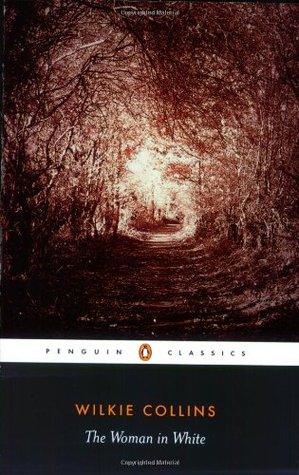
December review for Book Riot's Read Harder 2018: The Woman in White by Wilkie Collins, 1860. [Classic of genre fiction category]


16058113I really, really wanted to like The Woman In White by Wilkie Collins. It's the OG gothic horror novel, called the first "sensation fiction" and one of the first mystery novels, and there were parts of it that were really good! The mystery was fun (one of the reasons I actually finished it) but there were just some needling things that I could not get over. This was my December 2018 book, but I just needed such long cooling-off periods in between reads that it stretched over into the new year. (As did the penning of this blog post....) But here we go. The Woman In White starts with "an eerie encounter on a moonlit road," according to all the summaries of it, but I'm going to be honest and say I just didn't find it quite that eerie. Maybe because I am distanced from the time in which it was written? But I digress. Walter Hartwright meets a woman on a road late at night, she tells him a story, and disappears into the darkness (despite wearing the brightest white the guy has ever seen). Then he hears a rumor she might've escaped from an asylum. My knee-jerk reaction is to always sympathize with women who claim unlawful incarceration, especially in asylums, especially with the imbalance of power that comes from taking away a human's agency and the stability of their mind. So I was already on this woman's side, and not Mr. Hartwright's, so I might not have been Mr. Collins's intended audience. I was forging my own path. 

Things happen, Mr. Hartwright continues on to his job which (coincidentally) is tangentially related to that weird occurrence. He is to teach drawing to this young woman on an estate, whose uncle is psychosomatically incapacitated and particular, but thank goodness for the woman's sister, Marian, who could maybe fight for her if anything were to happen. But then enters my true rage. Marian begins to say things about her character as a woman being deficient for pretty much anything, all the while holding herself in high esteem. 

Allow me to just summarize some of my feelings by treating you to a sampling of my rage-tweets on the matter:


So. the women are not allowed to be even full humans, let alone strong or capable or even fucking interesting. I have feelings. Continuing on with the mystery, enter new players that make me super skeptical, and another woman who just lives at the behest of her husband and is also portrayed as a viper and someone you should not like at all. Marian ends up spying on this husband and his friend (who is now married to her sister and trying to basically extort her but he's her husband so that's ok), and she overhears these things--cue more rage-tweets:

Marian of course catches her death while she eavesdrops and is PRETTY MUCH INCAPACITATED FOR A GOOD PORTION OF THE REST OF THE BOOK, allowing the next step of the shitty men's plan to come to fruition. AWESOME. But it's not like she could've done much, anyway, remember? She's just a woman.

The anger continued as I stubbornly made my way through the rest of the book. The twist was relatively interesting, and something that I only partially saw coming (the gist of it, not the particulars), and so I soldiered on.


The book is sort of an epistolary fiction, taking sections from each player and point of view, their diaries and correspondence, so it was interesting to move through different "versions" of the story, especially at the end when so much comes to a head and things are revealed. I can't really summarize the end because I am too tired for it and also no spoilers, but needless to say shit goes down, women get some measure of power, but ultimately it is the men who "fix" everything. Because of course. I would have liked this book more if the power the women got was sustained and appreciated. If Marian had actually used her strength to get her sister out after she, too, was wrongfully shut up in an asylum, instead of the men "allowing" her to do it behind the scenes. The suggestion that every move a woman made was foreseen and encouraged by the men around them was just infuriating, and the systematic denial of the women characters any sort of thought or even self-appreciation was just exhausting. I don't know if Wilkie Collins hated women or had complicated feelings about them and was just toeing the party line of the late 19th century, but the fact that this was a highly original type of story is diminished in my eyes by his treatment of these characters. In fact, the entire premise of the mystery depends on the subjugation and other-ness of the women involved, so really, this story could not have been told if he felt any differently about women.

Reader, I finished it. I suppose I am glad to have read it (something I always gauge myself on when I finish something I don't love), and I am glad to have had the outlet of Twitter and my friends to keep me sane through the reading of it.

Tuesday, July 17, 2018

JUN - Wide Sargasso Sea

June review for Book Riot's Read Harder 2018: Wide Sargasso Sea by Jean Rhys, 1966. [colonial/postcolonial literature category]


One of the reasons I love challenges like this is that it forces me to read things that have been sitting on my shelf for years but I have not had the impetus to pick up. (There are just so many good books in the world, y'all. And new ones every day!) The category of postcolonial literature listed Wide Sargasso Sea atop many of its lists, and as a retelling of Jane Eyre, I was hungry to delve in. Wide Sargasso Sea tells the untold story of the madwoman in the attic, the woman who exists almost purely as a tragic backstory for Rochester, an eerie element of Jane's life, and an impediment to their relationship. Very rarely is her name even referenced when discussing Jane Eyre: often she is simply "the mad wife," a small sliver that is quickly dealt with, a side story tangential to Jane's. She is a question that has always stuck out to me, and one I was grateful to see someone had attempted to answer.

Postcolonial literature is, simply put, literature written by and about people of formerly colonized countries, and WSS does this twofold: it centers the a character from a postcolonial country (Antoinette Cosway, the mad wife) and is written by a woman of similar background (Jean Rhys is from Dominica). The introduction for my copy of WSS is by Francis Wyndham and notes that this book, while inextricably linked to Jane Eyre, stands on its own: "the Bronte book provided the initial inspiration for an imaginative feat almost uncanny in its vivid intensity." Rhys's reclaiming of Antoinette's story is almost an attempt to undo the colonization of her home and her voice, and she does it impeccably.

I've always loved Jane Eyre, so it was interesting to see a different perspective of that story. In addition, I am a sucker for thought-provoking perspective shifts, so Wide Sargasso Sea has long been a part of my to-be-read pile. I was pitched the book as a retelling of JE from the madwoman's point of view: I therefore did not expect the text to change point of view. The three distinct viewpoints of the story mark three distinct parts of her life: the first-person of Antoinette's childhood, growing up on the island; part two switches to an unnamed man's perspective, assumed to be Rochester upon his marriage to Antoinette and subsequent disillusionment; and part three, told through the eyes of a broken woman taken from her home, Antoinette has become the madwoman and echoes the events that take place in JE. Now, I didn't particularly like Mr. Rochester when I read JE initially--every subsequent re-read makes me question what she sees that allows her to marry him--and this retelling made me dislike Rochester more. He is stubborn and arrogant and self-serving and violent, and his perspective did nothing to quell that or humanize him in any way. His character lacking that humanization again made me examine what it is that I love about Jane Eyre, why I keep going back to it. It is definitely mostly for Jane herself, and for the middle bits. The parts that lead up to her leaving Rochester and coming into her own. In a perfect world, Rhys's novel would mesh with JE, Jane would realize that Rochester is a monster and she would whisk Antoinette away to be cared for like the human that she is. A girl can dream, right?

Sunday, May 13, 2018

MAR - The Story of Edgar Sawtelle

March review for Book Riot's Read Harder 2018: The Story of Edgar Sawtelle by David Wroblewski, 2008. [Oprah Book Club Selection category]

The Story of Edgar Sawtelle was pitched to me as Hamlet in the Midwest. It was one of those books I recognized the cover of, had seen around for years, but had never picked up. Beware, the last paragraph of this discusses the ending of the book, so be on the lookout for spoilers. The Story of Edgar Sawtelle by David Wroblewski is about, of course, Edgar Sawtelle, a boy born mute (though there seems to be no reason for it) who speaks only in his own blend of sign. He is part of the Sawtelle family that has bred and trained dogs on their farm for years, and he is learning from his father the tricks of the trade. All that changes when his uncle shows up in their lives again and his father dies suddenly...Edgar ends up running away with a handful of his litter.

This book was beautiful. I am in awe of the way Wroblewski uses language, and his descriptions were just so beautiful. I appreciated the multiple perspectives you got throughout the different chapters of the book: in the post interview, he said that the original draft was all from Edgar's POV, but he is so glad he changed that, as the other thoughts give the story a richness and a darkness that most likely would not have been conveyed otherwise. Everything in this book felt deliberate, whether it was the specificity of the dog training descriptions or the ways in which the chapters were broken up. That deliberateness lent itself to the character of Edgar, who always had to be so cognizant of what he was doing or saying in a world that had trouble understanding him.

On that note, I'd like to talk a little about Edgar's silence, and the other kinds of communication he adapts throughout his life. Edgar does not even enter the story as a primary focus for the first thirty pages: the prologue introduces a character who remains nameless (later it makes sense that this character is Claude, or maybe I missed some clues prior), the first chapter is about the man who built the barn and the house where the Sawtelles now live, and then Edgar's birth is not even witnessed. Instead, the focus stays with Almondine, the trusty dog, on the farm while Edgar's parents leave for the hospital and return days later with a small, silent creature. It becomes clear that Edgar is mute, though there is nothing wrong with his physiology that would incite such muteness, but alas. He just did not make sounds. His parents start teaching him sign early on, at the behest of a visiting stranger, and this evolves into their own special language. Edgar also can write notes, communicate in sign with the dogs, and utilize facial and body expression to get his point across. But the most heartbreaking thing, the most crucial moment of his life is defined by his inability to make a noise, to call for help when his father is dying. Silence becomes his curse and his companion when he ventures out away from the barn. It is a long time before he meets the man that turns him around and takes him home. It is a long time before the silence stops eating at him.

The ending was something I was unsure of after closing the book. The fire that tears apart the Sawtelles' barn, the way Edgar and his uncle Claude interact with it and each other, the tragedy of their relationship and the situation it has put them in at the end. I believe we are to assume that they both die in the fire, but on this particular point, the author is circumspect, which I think is important in terms of staying with the tone of the book. How did it make me feel that they both succumbed to the flames? Neither knew the honest truth of what the other had done, and they died trying to hide their secrets and prove their history, respectively. My heart ached after the end of this book, and that is not something one comes across every day.

Tuesday, March 20, 2018

FEB - Miss Marple: The Complete Short Stories

February review for Book Riot's Read Harder 2018: Miss Marple: The Complete Short Stories by Agatha Christie, 1985. [female protagonist over the age of 60 category]


Agatha Christie truly is a gem. Miss Marple has established herself in the general consciousness, so much so that I felt like I already knew her when starting this collection, even though I'd never read her stories before. I am a big fan of strong lady characters, and I was excited to see how this one was structured, why she has established herself in the pantheon of greats. The Chicago Sun-Times quote on the front of my copy refers to Miss Marple as "One of the greatest female sleuths of all time!"

The first story, "The Tuesday Night Club," introduces the conceit of the first few stories. Miss Marple is not the first character introduced: her nephew is the first mentioned, as is his background as a writer, so his description is weighty. Her appearance is described, her now-quintessential black lace mittens and her knitting, and she is referred to often as "benignant." We come to always see Miss Marple like this, from the outside, almost as an afterthought. She is often brought back into the story after spacing out or getting distracted. She is very self-deprecating, always talking about how she couldn't possibly presume to know the answer, but she had a very similar story from her village... I thought it very intriguing and rather "of the times" to paint her as such an unassuming simple woman.

All in all, an interesting portrayal of women, especially the juxtaposition between Miss Marple and Miss Jane Helier, for example. (Both called Jane, I might add! Fun little coincidences.) Jane Helier is described as a relatively stupid, gorgeous actress. In "The Affair at the Bungalow," Miss Helier is telling a story to the group and she often has trouble getting going:
"It's very difficult," she said plaintively, "to say just what you want. One gets things mixed up and tells the wrong things first." (p180)
She is played off as this stupid, vapid woman, when in actuality she concocted one of these plans (spoiler alert!). Christie never plays them off of each other, saying one is better than the other: Miss Marple helps Jane Helier, whispers to her when she thinks Miss Helier is a bit off track on her concoction, but doesn't out her in front of the men of the group. These women back each other up, something I think is important to remember in such divisive times.

Saturday, August 12, 2017

JUL - Murder on the Orient Express

July review for Book Riot's Read Harder 2017: Murder on the Orient Express by Agatha Christie, 1934. [published between 1900 and 1950 category]

Murder on the Orient Express is soon to be made into a movie, so what better incentive for me to finally pick it up and climb aboard? ~~Be forewarned that I WILL mention the solution to the murder, so if you don't want to be spoiled, I suggest you leave now!~~

Murder on the Orient Express was written in 1934 by Agatha Christie, originally published as "Murder in the Calais Coach." It is one of the infamous Hercule Poirot mysteries, an indefatigable detective with an equally indefatigable mustache that Christie relied heavily on for many of her mysteries. The premise is this: Poirot finds himself on a train where there has been a murder. The train is snowed in on the tracks, creating a sort of locked-room scenario that Poirot is tapped to solve, given his apparently widespread reputation. I found a helpful link that gave me some little annotations to help immerse myself in the story more. Being written and set in the 1930s, there were some accouterments I was less than familiar with, such as a slip coach, as well as some untranslated French.

I like Agatha Christie's writing style, and I think she sort of gets a bad rap for being a terrible writer, which I do not believe to be the case. She is one of the few mystery writers that I can content myself with just reading and absorbing as I go, not trying to figure out the answer to the mystery before it happens. She lets me wait, and my overactive brain appreciates that. This story has been called "one of the most ingenious stories ever devised," and it has had many a cultural reference spinoff in its time. The fact that (SPOILER) all 13 passengers were involved in planning and committing the murder, leaving Poirot again and again to the same impossible conclusion with contradictory stories and evidence, is a highly clever one. I think the movie Hot Fuzz took that approach into consideration when writing, and I really enjoyed it. It turns the idea of a singular solve, a singular villain, on its head and forces the reader to go back and rethink the story.

In terms of the upcoming film, I have some feelings. First and foremost that I object to the casting ofJudi Dench as Princess Natalia Dragomiroff, not because of Judi Dench (because she is a goddess), but because there is constant references to the Princess as "one of the ugliest old ladies [Poirot] had ever seen. [...] an ugliness of distinction--it fascinated rather than repelled" (p25). She is also referred to as having a yellow, toad-like face and I resent this connection to Dame Judi! That being said, I do look forward to seeing Kenneth Branagh and his ridiculous mustache solve this crime on the silver screen this November.

Sunday, March 27, 2016

FEB - The Island of Dr. Moreau

February review for Eclectic Reader's Challenge 2016: The Island of Dr. Moreau by H.G. Wells, 1896. [Takes Place on an Island category]


The Island of Dr. Moreau is a classic, one I've been meaning to read for a long time. Thank you, Orphan Black, for giving me the final push! (Season 3 featured a secret encoded in a copy of this book by one of the scientists responsible for the clone experiments.) I'm not sure I really have much to say about The Island of Dr. Moreau, other than that it was a quick read that I enjoyed as well as felt a little off-put by. For those who are not familiar with this book, it is about a scientist, Dr. Moreau, who removes himself to a remote island after society discovers that he has been experimenting with something called vivisection, which is experimenting surgically on live animal subjects. The story is not told from his perspective, however, and he does not show up right away. Instead, we come to this island and experience its horrors through the eyes of a shipwrecked man named Prendick. Prendick is rescued by Montgomery, who is assisting with the delivery of a fresh crop of animals to his associate Moreau on their island, and through a number of mishaps, Prendick ends up joining the two men on the island as well, although he is not necessarily wanted. Prendick finds out what Moreau is doing on the island, following the anguished cries of animals to an off-limits lab where he conducts his vivisection experiments that he populates the island with. Everything pretty much goes downhill from there, although the real action only takes a few days, and the rest is just Prendick going slightly insane by himself on the island while he waits for a ship to pass by and pick him up.

After his experience, Prendick becomes somewhat of an island unto himself, a veritable social pariah, so paranoid and paralyzed is he by the things he has seen. I suppose anyone would be, after seeing both your living companions killed and the social experiment devolve into madness and violence and you have to survive it somehow. It is a bit hazy (to me; I could be remembering things incorrectly) how long Prendick spent on the island, but this seems very much in keeping with the island mentality, where time passes differently and the outside world has no hold on what comes to pass. Prendick spends much of the book yearning for the outside world, to escape the hellishness he is experiencing on the island, but when he finally re-enters society, he finds himself almost inclined to return to the solitude of his exile. This juxtaposition/reversal is one of many that Wells exploits in Prendick's tale.

H.G. Wells was lauded as a relatively prescient man, however extreme his version of the future might have been. Perhaps it is this prescience that allows his works, while clearly ensconced in the realm of science fiction, can still be so relevant today.