December review for Book Riot's Read Harder 2018: Chilling Adventures of Sabrina Vol 1: The Crucible by Roberto Aguirre-Sacasa and Robert Hack (Artist), 2016. [comic not published by Marvel, DC, or Image category]
Netflix adapted Chilling Adventures of Sabrina last year and I, like many horror fantasy fans, was rightly excited. Kiernan Shipka looked perfect, and I couldn't wait to see Miranda Otto in a new light. Needless to say, I greedily binged the series when it came out and went out in search of the original graphic novel, to really round out my obsession.
The graphic novel is certainly much darker than the Netflix adaptation, killing Harvey instead of his brother, and playing into the trauma surrounding Sabrina's father more deeply with (~spoilers~) his spirit coming back in Harvey's body. I think I liked what the adaptation did, shifting the darkness in certain ways, such as those mentioned above, to make the horror hit a little more closer to home, not as on-the-nose.
One thing I really liked about the graphic novel was the Riverdale crossover: we actually got to see characters from the Riverdale universe come into Sabrina's world (much to their dismay, however), and I look forward to seeing whether that will come into play in the adaptation as well, seeing as the Riverdale TV show is so very popular already.
Reading this copy of Chilling Adventures: Vol I, there was an introduction by Roberto Aguirre-Sacasa, talking about his process, how he came to the story and how he found the right feel. I absolutely feel like the art style was positively reflected in the Netflix adaptation, and I found it perfectly on-key for the vibe of the story. I look forward to moving further into Sabrina's world, both reading and streaming.
Monday, April 1, 2019
DEC - The Woman In White
December review for Book Riot's Read Harder 2018: The Woman in White by Wilkie Collins, 1860. [Classic of genre fiction category]
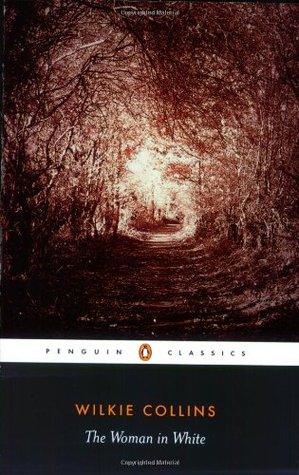
I really, really wanted to like The Woman In White by Wilkie Collins. It's the OG gothic horror novel, called the first "sensation fiction" and one of the first mystery novels, and there were parts of it that were really good! The mystery was fun (one of the reasons I actually finished it) but there were just some needling things that I could not get over. This was my December 2018 book, but I just needed such long cooling-off periods in between reads that it stretched over into the new year. (As did the penning of this blog post....) But here we go. The Woman In White starts with "an eerie encounter on a moonlit road," according to all the summaries of it, but I'm going to be honest and say I just didn't find it quite that eerie. Maybe because I am distanced from the time in which it was written? But I digress. Walter Hartwright meets a woman on a road late at night, she tells him a story, and disappears into the darkness (despite wearing the brightest white the guy has ever seen). Then he hears a rumor she might've escaped from an asylum. My knee-jerk reaction is to always sympathize with women who claim unlawful incarceration, especially in asylums, especially with the imbalance of power that comes from taking away a human's agency and the stability of their mind. So I was already on this woman's side, and not Mr. Hartwright's, so I might not have been Mr. Collins's intended audience. I was forging my own path.
Marian of course catches her death while she eavesdrops and is PRETTY MUCH INCAPACITATED FOR A GOOD PORTION OF THE REST OF THE BOOK, allowing the next step of the shitty men's plan to come to fruition. AWESOME. But it's not like she could've done much, anyway, remember? She's just a woman.
The anger continued as I stubbornly made my way through the rest of the book. The twist was relatively interesting, and something that I only partially saw coming (the gist of it, not the particulars), and so I soldiered on.
The book is sort of an epistolary fiction, taking sections from each player and point of view, their diaries and correspondence, so it was interesting to move through different "versions" of the story, especially at the end when so much comes to a head and things are revealed. I can't really summarize the end because I am too tired for it and also no spoilers, but needless to say shit goes down, women get some measure of power, but ultimately it is the men who "fix" everything. Because of course. I would have liked this book more if the power the women got was sustained and appreciated. If Marian had actually used her strength to get her sister out after she, too, was wrongfully shut up in an asylum, instead of the men "allowing" her to do it behind the scenes. The suggestion that every move a woman made was foreseen and encouraged by the men around them was just infuriating, and the systematic denial of the women characters any sort of thought or even self-appreciation was just exhausting. I don't know if Wilkie Collins hated women or had complicated feelings about them and was just toeing the party line of the late 19th century, but the fact that this was a highly original type of story is diminished in my eyes by his treatment of these characters. In fact, the entire premise of the mystery depends on the subjugation and other-ness of the women involved, so really, this story could not have been told if he felt any differently about women.
Reader, I finished it. I suppose I am glad to have read it (something I always gauge myself on when I finish something I don't love), and I am glad to have had the outlet of Twitter and my friends to keep me sane through the reading of it.
I really, really wanted to like The Woman In White by Wilkie Collins. It's the OG gothic horror novel, called the first "sensation fiction" and one of the first mystery novels, and there were parts of it that were really good! The mystery was fun (one of the reasons I actually finished it) but there were just some needling things that I could not get over. This was my December 2018 book, but I just needed such long cooling-off periods in between reads that it stretched over into the new year. (As did the penning of this blog post....) But here we go. The Woman In White starts with "an eerie encounter on a moonlit road," according to all the summaries of it, but I'm going to be honest and say I just didn't find it quite that eerie. Maybe because I am distanced from the time in which it was written? But I digress. Walter Hartwright meets a woman on a road late at night, she tells him a story, and disappears into the darkness (despite wearing the brightest white the guy has ever seen). Then he hears a rumor she might've escaped from an asylum. My knee-jerk reaction is to always sympathize with women who claim unlawful incarceration, especially in asylums, especially with the imbalance of power that comes from taking away a human's agency and the stability of their mind. So I was already on this woman's side, and not Mr. Hartwright's, so I might not have been Mr. Collins's intended audience. I was forging my own path.
Things happen, Mr. Hartwright continues on to his job which (coincidentally) is tangentially related to that weird occurrence. He is to teach drawing to this young woman on an estate, whose uncle is psychosomatically incapacitated and particular, but thank goodness for the woman's sister, Marian, who could maybe fight for her if anything were to happen. But then enters my true rage. Marian begins to say things about her character as a woman being deficient for pretty much anything, all the while holding herself in high esteem.
Allow me to just summarize some of my feelings by treating you to a sampling of my rage-tweets on the matter:
So. the women are not allowed to be even full humans, let alone strong or capable or even fucking interesting. I have feelings. Continuing on with the mystery, enter new players that make me super skeptical, and another woman who just lives at the behest of her husband and is also portrayed as a viper and someone you should not like at all. Marian ends up spying on this husband and his friend (who is now married to her sister and trying to basically extort her but he's her husband so that's ok), and she overhears these things--cue more rage-tweets:
Marian of course catches her death while she eavesdrops and is PRETTY MUCH INCAPACITATED FOR A GOOD PORTION OF THE REST OF THE BOOK, allowing the next step of the shitty men's plan to come to fruition. AWESOME. But it's not like she could've done much, anyway, remember? She's just a woman.
The anger continued as I stubbornly made my way through the rest of the book. The twist was relatively interesting, and something that I only partially saw coming (the gist of it, not the particulars), and so I soldiered on.
Stayed home sick from work today in this #polarvortex. Thought I would power through #WomanInWhite but it's just making me ANGERY #ragereading #currentlyreading pic.twitter.com/TZjuUSZvn4— Caitlin Sonnet Boom Clayton (@SonnetWrites) January 31, 2019
The book is sort of an epistolary fiction, taking sections from each player and point of view, their diaries and correspondence, so it was interesting to move through different "versions" of the story, especially at the end when so much comes to a head and things are revealed. I can't really summarize the end because I am too tired for it and also no spoilers, but needless to say shit goes down, women get some measure of power, but ultimately it is the men who "fix" everything. Because of course. I would have liked this book more if the power the women got was sustained and appreciated. If Marian had actually used her strength to get her sister out after she, too, was wrongfully shut up in an asylum, instead of the men "allowing" her to do it behind the scenes. The suggestion that every move a woman made was foreseen and encouraged by the men around them was just infuriating, and the systematic denial of the women characters any sort of thought or even self-appreciation was just exhausting. I don't know if Wilkie Collins hated women or had complicated feelings about them and was just toeing the party line of the late 19th century, but the fact that this was a highly original type of story is diminished in my eyes by his treatment of these characters. In fact, the entire premise of the mystery depends on the subjugation and other-ness of the women involved, so really, this story could not have been told if he felt any differently about women.
Reader, I finished it. I suppose I am glad to have read it (something I always gauge myself on when I finish something I don't love), and I am glad to have had the outlet of Twitter and my friends to keep me sane through the reading of it.
Sunday, March 31, 2019
NOV - Infinite Jest
November review for Book Riot's Read Harder 2018: Infinite Jest by David Foster Wallace, 2005. [assigned book you never finished]
My friends and I started reading Infinite Jest a few years ago, but our little book club petered out. It sat on my shelf for a long time, until this category! I do love the language, the way DFW plays with words, but it was difficult to get through, especially in the way I've been reading, snatches on my commute or drowsy in bed. That being said, I am glad I finished it.
How does one really summarize Infinite Jest? It is a postmodern encyclopedic novel, a behemoth of a text that I used as a headrest on more than one occasion. It has been described as "meta modernist" and "hysterical realist." It's set in a halfway house and a tennis academy, features junkies on both sides, told in a stream-of-consciousness similar to that popularized by Virginia Woolf, but very very clearly written and created by a man. There is an Infinite Jest wiki that was wildly helpful throughout my reading, because god knows the footnotes were just as cryptic as the book itself.
So much of this book is figuring out DFW's language/shorthand etc. He uses footnotes for wildly differing reasons, from defining the technical composition of drugs to parenthetical interviews to asides to fucking defining POV but there's nothing that is like "when I say demapped it means killed or suicide" like most normal footnotes. The truth (Truth) in this book is constructed, rather than reported (page 1048, footnote 269). The footnotes can be used as construction, in various ways: through asides (264), definitions (308), parentheticals (325), and research (304), among others.
I am glad to have read this book, I am stubborn enough to have finished it, but I am equally glad that it is over. David Foster Wallace is a very talented and complicated man, to be sure, and a genius with wordplay, and he is truly worth studying.
My friends and I started reading Infinite Jest a few years ago, but our little book club petered out. It sat on my shelf for a long time, until this category! I do love the language, the way DFW plays with words, but it was difficult to get through, especially in the way I've been reading, snatches on my commute or drowsy in bed. That being said, I am glad I finished it.
How does one really summarize Infinite Jest? It is a postmodern encyclopedic novel, a behemoth of a text that I used as a headrest on more than one occasion. It has been described as "meta modernist" and "hysterical realist." It's set in a halfway house and a tennis academy, features junkies on both sides, told in a stream-of-consciousness similar to that popularized by Virginia Woolf, but very very clearly written and created by a man. There is an Infinite Jest wiki that was wildly helpful throughout my reading, because god knows the footnotes were just as cryptic as the book itself.
So much of this book is figuring out DFW's language/shorthand etc. He uses footnotes for wildly differing reasons, from defining the technical composition of drugs to parenthetical interviews to asides to fucking defining POV but there's nothing that is like "when I say demapped it means killed or suicide" like most normal footnotes. The truth (Truth) in this book is constructed, rather than reported (page 1048, footnote 269). The footnotes can be used as construction, in various ways: through asides (264), definitions (308), parentheticals (325), and research (304), among others.
![]() |
| A friend's review of IJ, immortalized |
Saturday, March 30, 2019
NOV - Nimona
November review for Book Riot's Read Harder 2018: Nimona by Noelle Stevenson, 2015. [comic drawn and written by the same person]Nimona is so many things I've always wanted in a graphic novel. Scrappy girl protagonists, magic, upending of the dichotomy of good and evil, magical bureaucracy, and shapeshifting! Plus Noelle Stevenson, the author/artist is like, the coolest (and now she has made She-Ra on Netflix, which is equally rad).
Nimona comes to Sir Ballister Blackheart as a new sidekick and pretty much throws a wrench in all of his plans. Sir Ballister is pretty much the top dog in a magical world that blends magic and sci-fi tech, and he never really gets much done until Nimona shows up. He has to try to teach is protege restraint (she always wants to go around killing people and setting things on fire, which is a bit too far for the cerebral villain Sir Ballister. Nimona is a fiery little girl with a butch haircut and a big mouth who also happens to be a shapeshifter! How incredibly cool would it be to be Nimona?
Nimona and Ballister go on missions, quibble about the level of villainy that is acceptable, and slowly become close. The Good Guy Brigade (I mean, the Institute) employs Ballister's archnemesis, the hero Goldenloin, who has some serious history with our villain. As the story progresses, we learn more and more about the less-good things about the Institute, Goldenloin gets more and more disillusioned with his job sitch, and Ballister and Nimona burrow their way into each others' hearts, and of course the inevitable happens, where they hurt each other and leave, but Sir Ballister works to find her again, and set things right. Nimona deals with such heavy shit in such a completely understandable and accessible manner, even though it is sci-fi, and it is going to be a classic for a long time.
![]() |
| Nimona in a nutshell |
Monday, March 25, 2019
OCT - Handling The Undead
October review for Book Riot's Read Harder 2018: Handling The Undead by John Ajvide Lindqvist, 2009. [genre fiction in translation category]

Handling The Undead by John Ajvide Lindqvist is a spooky book. But spooky in the way that it's pretty much our normal, everyday world, except for this one supernatural turn. I recognize that a lot of horror (and also thriller) can be explained this way, but my point is that Lindqvist doesn't come at the novel from the perspective of writing a scary story. He introduces human emotion and watches what happens when the world is turned upside down. What does grief do to a person, especially in the face of the impossible?
When the city is faced with a heat wave and weird occurrences start bringing people's loved ones back to life...but are they the same people? David's wife is the first one to come back, and he always knew she was too good for him, so how is he supposed to carry on and raise their kid without her? Or how can a grandfather go on without his favorite grandson? Or an old woman whose husband died recently, and his recurrence makes her question everything about her faith? Slowly, the country figures out what to do with the risen dead, calling in the army to sequester the increasingly more violent problem, and people pack in to see their loved ones when everything goes terribly wrong. Again, Lindqvist manages to tap into the most human part of horror, and Handling The Undead will leave you with the slightest of tingles at the base of your scalp long after you've turned the last page.

Handling The Undead by John Ajvide Lindqvist is a spooky book. But spooky in the way that it's pretty much our normal, everyday world, except for this one supernatural turn. I recognize that a lot of horror (and also thriller) can be explained this way, but my point is that Lindqvist doesn't come at the novel from the perspective of writing a scary story. He introduces human emotion and watches what happens when the world is turned upside down. What does grief do to a person, especially in the face of the impossible?
When the city is faced with a heat wave and weird occurrences start bringing people's loved ones back to life...but are they the same people? David's wife is the first one to come back, and he always knew she was too good for him, so how is he supposed to carry on and raise their kid without her? Or how can a grandfather go on without his favorite grandson? Or an old woman whose husband died recently, and his recurrence makes her question everything about her faith? Slowly, the country figures out what to do with the risen dead, calling in the army to sequester the increasingly more violent problem, and people pack in to see their loved ones when everything goes terribly wrong. Again, Lindqvist manages to tap into the most human part of horror, and Handling The Undead will leave you with the slightest of tingles at the base of your scalp long after you've turned the last page.
Tuesday, March 12, 2019
OCT - Heat Wave
October review for Book Riot's Read Harder 2018: Heat Wave by Richard Castle, 2016. [book with a cover you hate category]
I had to think real hard about this, because I often do the opposite: choose to read a book purely because I am intrigued by the cover. I don't know that I have ever actively hated a book cover: I am generally OK with movie tie-in editions, although I don't profess to *love* them, as long as I can still get my own attractive copy. So I had to dig deep and think about what I would really roll my eyes at when I saw a book. I settled, in the end, on romance novel covers (inexplicably glistening pecs and mid-swoon damsels) and pulp crime novels.
Heat Wave by Richard Castle is a little bit of both, arguably. It is a sort of tie-in with Castle the TV show (starring Nathan Fillion and Stana Katic), and I read it just as I was starting my partner on the show. Needless to say, the similarities between the Heat Wave characters and their inspirations are many and sometimes I had to double check which case I was in. Having that backstory (from the show) certainly enriched the experience, and I felt a little closer to the story than I maybe would have if I had just picked it up with no knowledge. All in all, I enjoyed this quick little read, even if the cover drove me a little crazy.
I had to think real hard about this, because I often do the opposite: choose to read a book purely because I am intrigued by the cover. I don't know that I have ever actively hated a book cover: I am generally OK with movie tie-in editions, although I don't profess to *love* them, as long as I can still get my own attractive copy. So I had to dig deep and think about what I would really roll my eyes at when I saw a book. I settled, in the end, on romance novel covers (inexplicably glistening pecs and mid-swoon damsels) and pulp crime novels.
Heat Wave by Richard Castle is a little bit of both, arguably. It is a sort of tie-in with Castle the TV show (starring Nathan Fillion and Stana Katic), and I read it just as I was starting my partner on the show. Needless to say, the similarities between the Heat Wave characters and their inspirations are many and sometimes I had to double check which case I was in. Having that backstory (from the show) certainly enriched the experience, and I felt a little closer to the story than I maybe would have if I had just picked it up with no knowledge. All in all, I enjoyed this quick little read, even if the cover drove me a little crazy.
Friday, February 22, 2019
2019 Read Harder
Hello! It is already nearly the end of February and I am still finishing my writing for 2018, shame on me! In any case, a lot has been going on, and I am trying to chug away at it as best I can. In the mean time, I want to make a little note to myself as I introduce the Book Riot 2019 Read Harder Challenge that I will be following again this year.
First of all, I (re)discovered Libby, an app that works with your library card to bring you e-books and audiobooks, and let me tell you that my work life is forever changed with the addition of audiobooks! I have already listened to so many, and it's only February! Because I have such a plethora of options available to me, I have made it a personal little challenge to increase the diversity of what I read, especially in terms of women, queers, and people of color. I have read enough white men for a while, and while a few may sneak back from time to time (looking at you, Stephen King) I want to prioritize other voices this year. I just finished We Were Eight Years In Power: An American Tragedy by Ta-Nehisi Coates (click here for a great review of it), and while it was very heavy, it is very very necessary and I have already stocked my Libby TBR pile with similar books for the coming months. White Fragility, When They Call You A Terrorist, Educated, Shrill, How Long 'Til Black Future Month....titles abound!
BOOK RIOT’S 2019 READ HARDER CHALLENGE
- An epistolary novel or collection of letters
- An alternate history novel
- A book by a woman and/or AOC (Author of Color) that won a literary award in 2018: The Fact Of A Body by Alexandria Marzano-Lesnevich
- A humor book
- A book by a journalist or about journalism
- A book by an AOC set in or about space: Binti by Nnedi Okorafor
- An #ownvoices book set in Mexico or Central America
- An #ownvoices book set in Oceania
- A book published prior to January 1, 2019, with fewer than 100 reviews on Goodreads
- A translated book written by and/or translated by a woman
- A book of manga
- A book in which an animal or inanimate object is a point-of-view character
- A book by or about someone that identifies as neurodiverse
- A cozy mystery
- A book of mythology or folklore
- An historical romance by an AOC
- A business book
- A novel by a trans or nonbinary author
- A book of nonviolent true crime: Can You Ever Forgive Me by Lee Israel
- A book written in prison
- A comic by an LGBTQIA creator
- A children’s or middle grade book (not YA) that has won a diversity award since 2009
- A self-published book
- A collection of poetry published since 2014
As of right now, I have a few books for the challenge under my belt, though I haven't written about any of them yet. I have to get back to my languishing partner, Writing, and treat her with the respect that is her due. It has been far too long!
Happy reading, 2019!
Subscribe to:
Posts (Atom)


